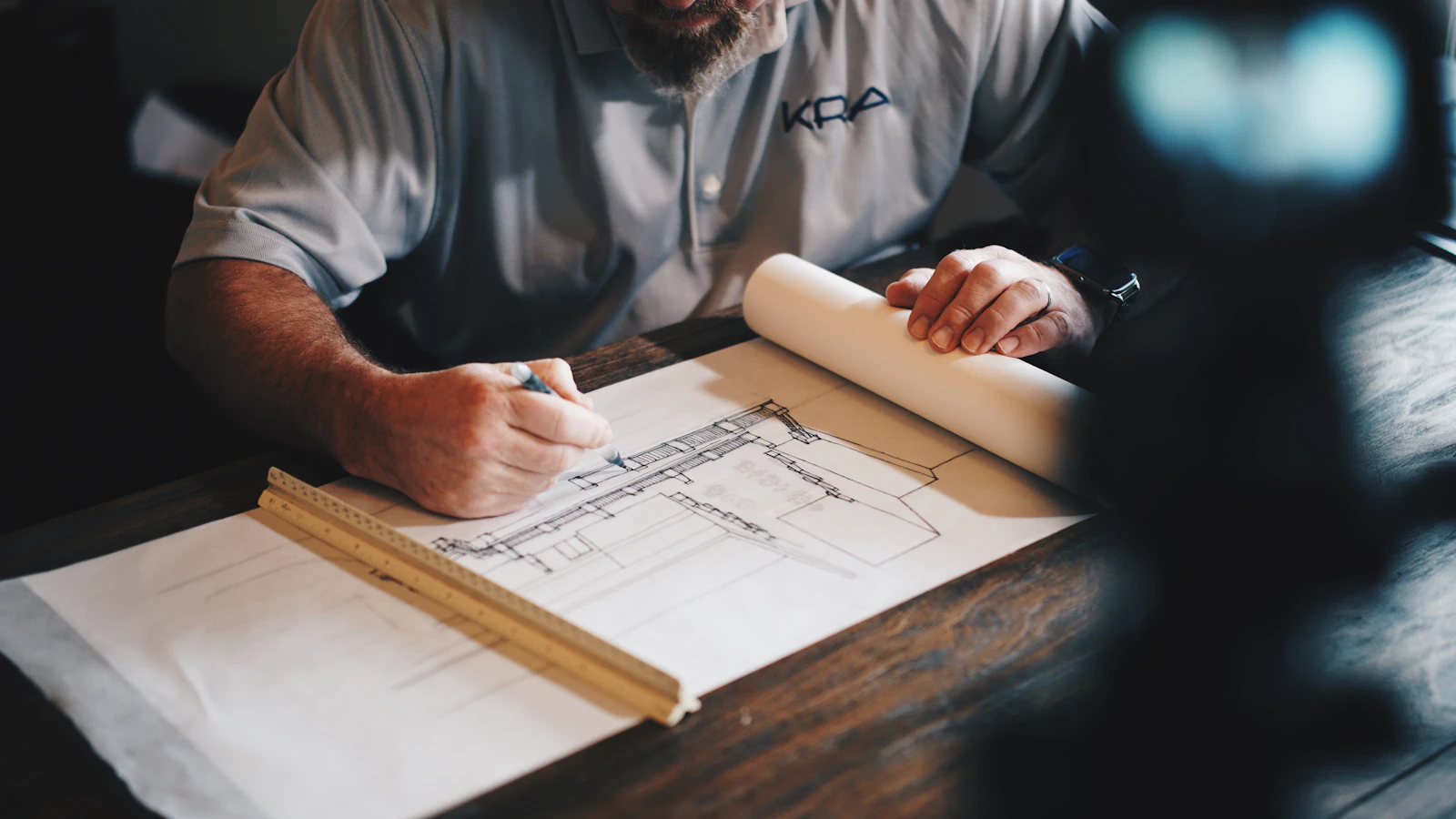
Design-build uses one integrated team for both design and construction, typically delivering faster timelines and single-point accountability, while traditional contracting separates the designer and contractor, offering more flexibility to choose specialists at each stage but requiring more client-side coordination.
Choosing between these models affects timeline, accountability, and how much coordination the client needs to manage personally.
How Design-Build Works
Designers, engineers and construction teams work from a shared plan from day one, allowing construction planning to begin before design is 100% finalized in some cases — this overlap is what compresses design-build timelines compared to sequential models.
How Traditional Contracting Works
An architect or designer completes drawings first, which are then tendered to contractors for pricing and construction. This gives clients more control over selecting each party individually but means design and construction happen sequentially, extending the timeline.
Accountability Differences
In design-build, one company is accountable for both design feasibility and construction quality, removing the ability for a designer and contractor to blame each other for issues. In traditional contracting, responsibility is split, which can be an advantage for detailed oversight but a disadvantage when problems arise.
Which Model Costs Less?
Design-build often costs less overall due to fewer delays and less rework from design-construction misalignment, even though traditional contracting can appear cheaper at the tendering stage.
Explore our Design & Build service.
Design-build is typically faster since design and construction planning overlap rather than happening sequentially.
Traditional contracting, since each trade or contractor can be tendered and selected separately.